August 17, 2026
Unemployed Software Engineers Should Do This
When Ouroboros Finishes
I’ve been working in the tech industry since the late 1990s.
During that time, I’ve been watching patterns within the industry at large. New ideas, for better or worse, catch on and spread. New technologies. New business practices. New values.
As an insider, I was generally appreciative of the technology itself. My career has largely been in the Open Source software space. If you’re not familiar, software developers around the world intentionally choose to give away the software that they’ve developed, both in terms of the source code used to build it, and the right to use it. Often there’s an agreement that if you make changes to the software, you offer them back to the original developer under the same software license.
Originally, this type of work was usually done by software developers outside of their paid work. The Linux kernel which powers servers all over the world was initially developed by Linus Tolvalds when he was a college student.
Eventually Open Source software was adopted by corporations, usually brought in by the developers. These days a significant amount of Open Source Software is supported by engineers hired by the biggest tech companies, like Google and Facebook.
The typical commercial codebase contains on average they contain about 77% open source software, which is often run on Open Source clusters like Kubernetes on Open Source operating systems like Ubuntu or Red Hat.
The best engineers in the world have contributed to a shared code base that is freely available to anyone in the world, including tremendous documentation and additional learning material. Classes are available to learn how to use the software.
In the last few years, hundreds of billions of dollars have been invested into building AI infrastructure which can dramatically increase the efficiency of each of those software engineers, in addition to all of the other current and future uses of AI in society.
“We have no current plans to make revenue. We have no idea how we may one day generate revenue. We have made a soft promise to investors that once we’ve built this sort of generally intelligent system, basically we will ask it to figure out a way to generate an investment return for you.”
— Sam Altman — CEO of OpenAI
We’ve already seen rather large layoffs across the Technology industry in the last few years, often citing AI as the reason. In some cases it’s related to an increased efficiency of the remaining engineers. In other cases, it’s because they’ve decided to shift the funding from headcount to AI spending.
The idea seems to be that profits will increase with less engineers on the payroll. I think will be right in the short term, which will likely increase the stock prices.
The longer-term picture looks like a disaster for the investors to me but may be the best-case scenario for society.
They’re focused on the financial and technical empires they’ve built, and their belief in it’s value.
I see a abused centralized systems built from stacks of software that is freely available to be used by whoever has a new idea.
I see an industry laying off skilled engineers en masse, with no concern about what they might decide to do with the tools they built and kept.
I see an industry arming its own potential competition with powerful AI assistants that they offer at a massive loss.
A while back I learned a new term from some Cory Doctorow content.
"A centaur is a human being who is assisted by a machine (a human head on a strong and tireless body). A reverse centaur is a machine that uses a human being as its assistant (a frail and vulnerable person being puppeteered by an uncaring, relentless machine)."
— Cory Doctorow
If the industry would like to enable Reverse Centaurs by using technology to create armies of workers acting in their benefit, we can choose the Centaur route instead.
I see an opportunity for small teams of engineers to use the tools available to them to build automation for their own community.
While I can see the convenience of being able to use a global platform for buying products as cheaply as possible, I also see the benefits to making it as easy as possible to buy locally.
The software required isn’t all that different, except it does not need to scale for a national or global user base. The hardware requirements are lower, and could run on retired enterprise gear. Most of the software is free, and the remainder can be replaced by skilled engineers (or in some cases already has been). Social media already exists that can be run directly by a community.
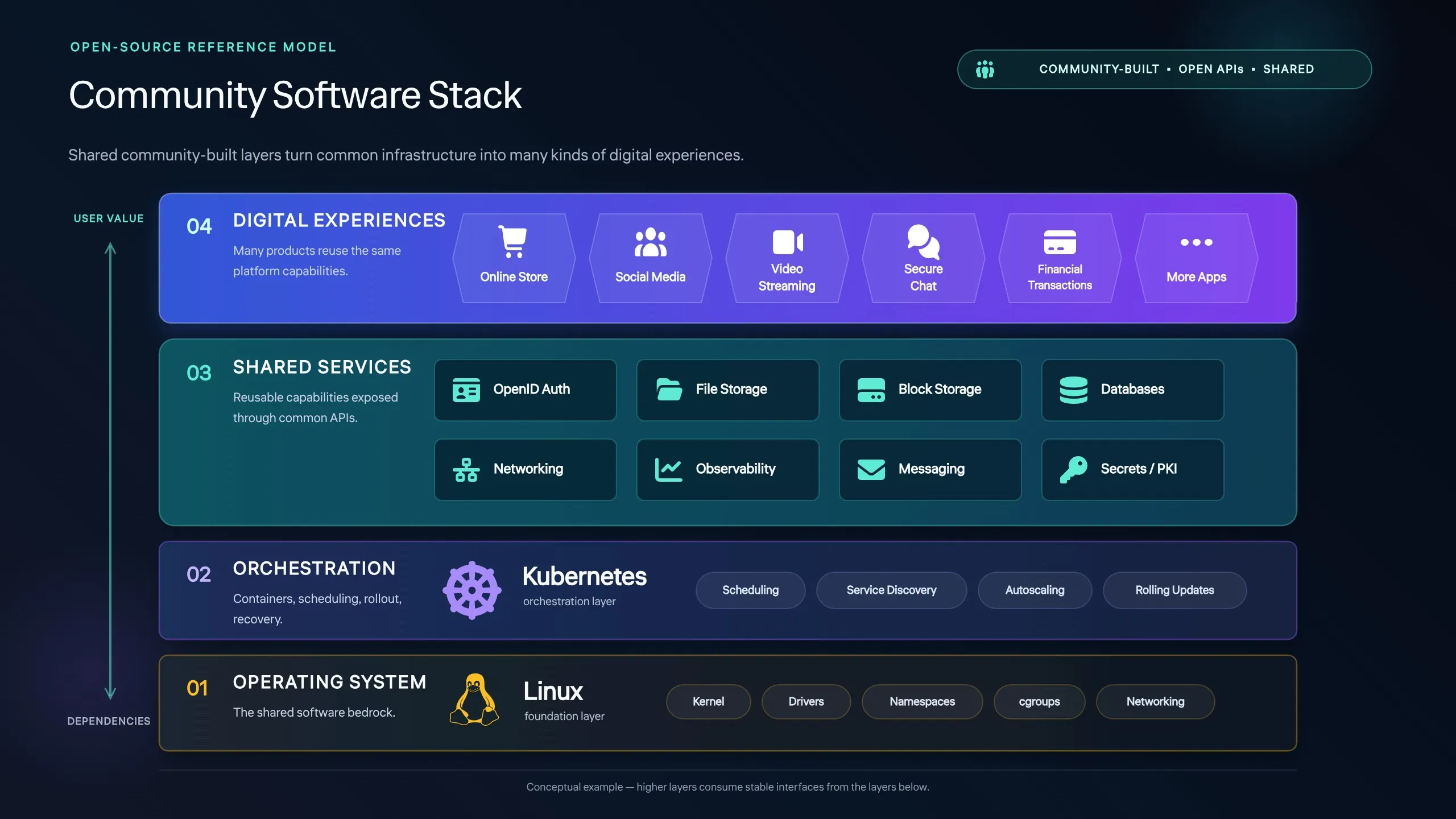
That just leaves the user base.
I firmly believe that we need to pay more attention to all of the stakeholders in our financial decisions, and tools to make this easier would be an incredibly powerful changing force in our society.
Getting everyone to shift over to it is not necessarily an easy problem, but it is one that can be worked on locally. An engineer looking for work, can re-shift their focus from finding a job in the saturated global tech industry onto learning what would help their own community.
This is what the industry has failed to see, and it’s what engineers can take advantage of.